
Traffic Rules
New Traffic Rules in 2026 Every Driver Must Know

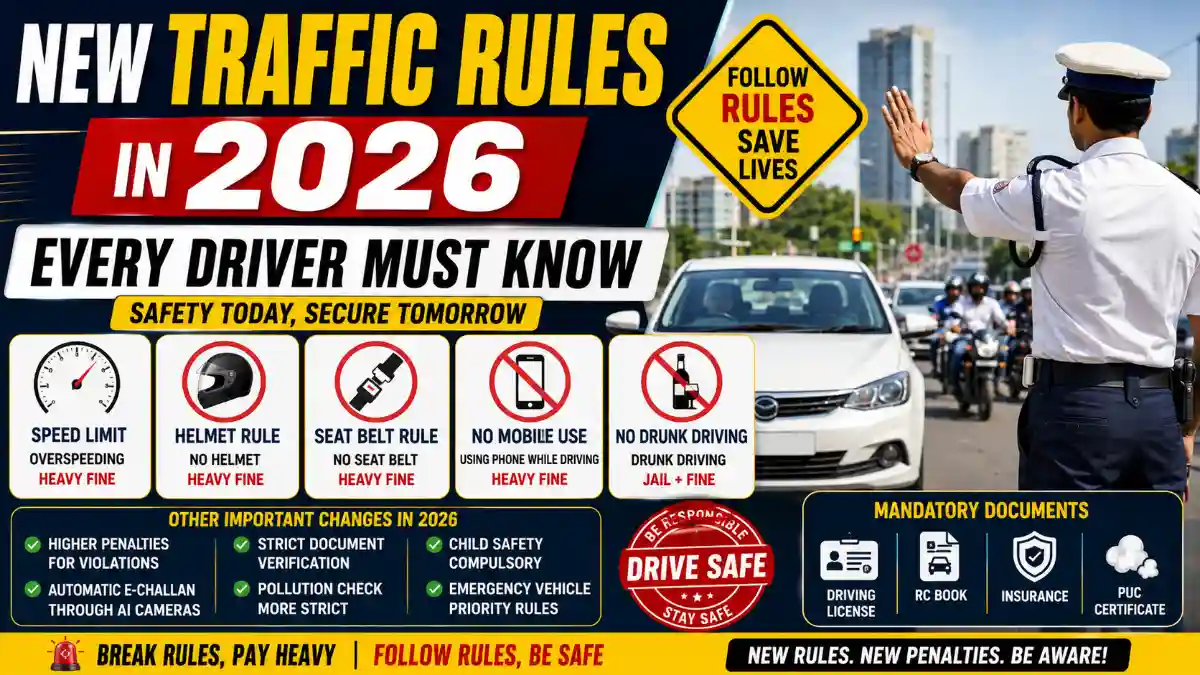
Road safety has become one of the biggest concerns worldwide, and governments are introducing stricter traffic laws every year to reduce accidents, improve discipline, and protect drivers and pedestrians. In 2026, several updated traffic rules, higher penalties, and stricter enforcement systems are being implemented to improve road safety and reduce dangerous driving behavior.
With the rapid increase in the number of vehicles on roads, traffic congestion and accidents have also increased significantly. Modern traffic systems now use AI cameras, automatic challan systems, digital monitoring, speed detection technology, and online verification tools to catch rule violations more efficiently than before.
Many drivers still remain unaware of the latest traffic laws, which often leads to heavy fines, license suspension, insurance issues, and legal complications. Whether you drive a car, bike, truck, or commercial vehicle, understanding the new traffic rules in 2026 is extremely important.
This article explains the latest traffic rules, updated penalties, important driving regulations, digital traffic systems, and road safety measures every driver must know in 2026.
Why New Traffic Rules Are Being Introduced
Governments are strengthening traffic laws mainly to:
- Reduce road accidents
- Improve road discipline
- Control drunk driving
- Reduce overspeeding
- Promote helmet and seatbelt use
- Encourage safe driving habits
- Improve pedestrian safety
Modern traffic management systems also help authorities monitor roads more effectively and reduce corruption through automated challan systems.
Importance of Following Traffic Rules
Traffic rules are not just about avoiding fines. They help protect lives and improve road safety for everyone.
Benefits of following traffic rules include:
- Lower accident risk
- Safer roads
- Better driving discipline
- Reduced traffic congestion
- Lower insurance problems
- Legal protection
Drivers who follow traffic laws carefully are less likely to face financial or legal difficulties.
1. Higher Penalties for Traffic Violations
In 2026, fines for traffic violations have become stricter in many regions.
Heavy penalties may apply for:
- Overspeeding
- Drunk driving
- Signal jumping
- Driving without seatbelt
- Riding without helmet
- Using mobile phones while driving
- Dangerous driving
- Wrong-side driving
Repeated violations can even lead to license suspension or vehicle seizure.
2. Strict Helmet Rules for Two-Wheeler Riders
Helmet laws are now being enforced more strictly than ever.
Important helmet rules include:
- Both rider and pillion rider must wear helmets
- Helmets must meet safety standards
- Loose or low-quality helmets may attract penalties
- Riding without a helmet can result in heavy challans
Authorities are focusing strongly on two-wheeler safety because bike accidents remain a major cause of road fatalities.
3. Seat Belt Rules for All Passengers
In 2026, seatbelt rules apply not only to front passengers but also rear-seat passengers in many places.
Failure to wear seatbelts can result in:
- Traffic fines
- Insurance claim issues
- Increased injury risk during accidents
Modern vehicles may also include seatbelt reminder systems for all seats.
4. Heavy Penalties for Drunk Driving
Drunk driving remains one of the most dangerous traffic violations.
Strict actions may include:
- Heavy fines
- License suspension
- Jail penalties
- Vehicle seizure
- Criminal charges in serious accidents
Authorities are using advanced breath analyzers and roadside checks to control drunk driving cases.
5. Mobile Phone Usage While Driving
Using a mobile phone while driving is now considered a serious safety risk.
Violations include:
- Texting while driving
- Video recording while driving
- Social media usage
- Holding a phone during driving
Hands-free systems may be allowed in some regions, but distracted driving rules have become much stricter.
6. Digital Traffic Challan System
Modern traffic management systems now use:
- AI cameras
- Speed sensors
- CCTV monitoring
- Automatic number plate recognition
Traffic violations are often detected automatically, and e-challans are sent directly to vehicle owners through digital systems.
This has improved transparency and reduced manual enforcement problems.
7. Speed Limit Enforcement
Overspeeding continues to be one of the biggest reasons for road accidents.
In 2026, authorities are using:
- Automatic speed cameras
- Highway radar systems
- AI-based speed monitoring
Drivers exceeding speed limits may receive automatic fines instantly.
Repeated speeding violations can lead to stricter punishment.
8. Driving License Verification Rules
Driving without a valid license is now heavily monitored through digital databases.
Important requirements include:
- Valid driving license
- Correct vehicle category authorization
- Updated license information
Commercial vehicle drivers may face additional verification requirements.
9. Pollution Control Rules
Vehicle pollution monitoring has become stricter due to environmental concerns.
Important rules include:
- Valid Pollution Under Control (PUC) certificate
- Emission compliance
- Regular vehicle maintenance
Driving vehicles without valid pollution documents may result in penalties.
10. Rules for Modified Vehicles
Illegal vehicle modifications are under stricter monitoring in 2026.
Unauthorized modifications may include:
- Loud exhaust systems
- Illegal lights
- Dangerous body modifications
- Altered number plates
Modified vehicles violating safety or environmental standards may face fines or seizure.
11. Child Safety Rules
Child safety inside vehicles is becoming increasingly important.
Recommended safety measures include:
- Child safety seats
- Rear seat placement
- Seatbelt use for children
Many countries are introducing stricter child passenger safety laws.
12. Insurance and Document Verification
Drivers must carry valid documents such as:
- Driving license
- Registration certificate
- Insurance policy
- Pollution certificate
Digital document apps are accepted in many areas, reducing the need for physical copies.
Driving without valid insurance can lead to major legal and financial problems.
13. AI-Based Traffic Monitoring
Artificial Intelligence is changing traffic management rapidly.
Modern systems can now detect:
- Seatbelt violations
- Helmet violations
- Mobile phone use
- Wrong-side driving
- Signal jumping
AI systems improve enforcement speed and accuracy.
14. Rules for Commercial Vehicles
Commercial vehicle operators face stricter compliance rules.
Important regulations include:
- Driver working hour limits
- Vehicle fitness certification
- GPS tracking
- Cargo safety rules
Transport companies are expected to follow stronger safety standards in 2026.
15. Emergency Vehicle Priority Rules
Drivers are now expected to give immediate priority to:
- Ambulances
- Fire trucks
- Police vehicles
Blocking emergency vehicles may lead to serious penalties.
Road awareness campaigns are encouraging drivers to cooperate during emergencies.
Common Traffic Violations Drivers Must Avoid
Some of the most common violations include:
- Signal jumping
- Wrong parking
- Dangerous overtaking
- Triple riding on bikes
- Drunk driving
- Overspeeding
- Driving without documents
- Using mobile phones while driving
Avoiding these mistakes can save drivers from heavy fines and accidents.
Impact of Traffic Violations on Insurance
Traffic violations can also affect car insurance in several ways:
- Higher insurance premiums
- Claim rejection risks
- Legal complications
- Reduced driver credibility
Safe driving records often help drivers receive better insurance benefits.
Road Safety Tips for Drivers
To stay safe and avoid penalties:
- Follow speed limits
- Wear helmets and seatbelts
- Avoid distracted driving
- Maintain safe distance
- Use indicators properly
- Keep documents updated
- Never drink and drive
Responsible driving protects both drivers and other road users.
Future of Traffic Management
Traffic systems are expected to become even smarter in the future.
Upcoming technologies may include:
- Smart traffic signals
- Connected vehicles
- AI-driven road monitoring
- Automatic accident detection
- Real-time traffic analytics
Technology will continue improving road safety and reducing traffic violations.
Conclusion
The new traffic rules in 2026 are focused on improving road safety, reducing accidents, and promoting responsible driving behavior. With stricter enforcement, higher fines, AI monitoring systems, and digital challan technology, drivers must become more aware of traffic laws than ever before.
Whether you drive a car, bike, or commercial vehicle, following traffic rules is essential not only to avoid penalties but also to protect lives. Modern traffic systems are becoming increasingly advanced, making it difficult to escape violations through traditional methods.
By driving responsibly, maintaining proper documents, and following updated road safety laws, drivers can avoid legal trouble, reduce accident risks, and contribute to safer roads for everyone.



-

 Latest News9 months ago
जीवन बदलने वाले 5 सबक, जो हम भूल जाते हैं
-

 धर्म10 months ago
सावन के अंतिम सोमवार को कैसे करें शिव की पूजा, सम्पूर्ण विधि
-

 Latest News12 months ago
वृंदावन: बांके बिहारी मंदिर के अलावा भी ये हैं दर्शनीय स्थान
-

 Latest News9 months ago
2025 का नया ट्रेंड: Quiet Life Movement क्यों लोग अब सुकून को मान रहे हैं असली लग्ज़री?